

Winter is coming! A season full of challenges for anyone who loves rare plants. Shorter days and less daylight quickly turn us into hunters of every last sunbeam and experts on the movement of celestial bodies. We plant people are known for our rational decisions, and we’re not afraid of bold, self-sacrificing moves. Personally, I sacrificed my partner’s office by the window and moved him to a corner of eternal darkness. Of course, it’s only temporary — the plants won’t take over his office forever. Or will they…
Here in Ljubljana we treasure the few sunny days we get, because the city spends most of the winter wrapped in fog that the sun rarely breaks through. Besides light, low temperatures and dry air cause plenty of trouble too. Every time we air out a room, temperature and humidity drop sharply. But all of these winter problems are just challenges, and with the right preparation they’re easy to overcome. Plants can grow beautifully in winter too, and keep bringing us plenty of joy.

Light
When the days get shorter and the sun struggles to light up the flat, we can move plants from the darkest corners of our jungle closer to the window. Because the sun is weaker, there’s less risk of the plants getting scorched.
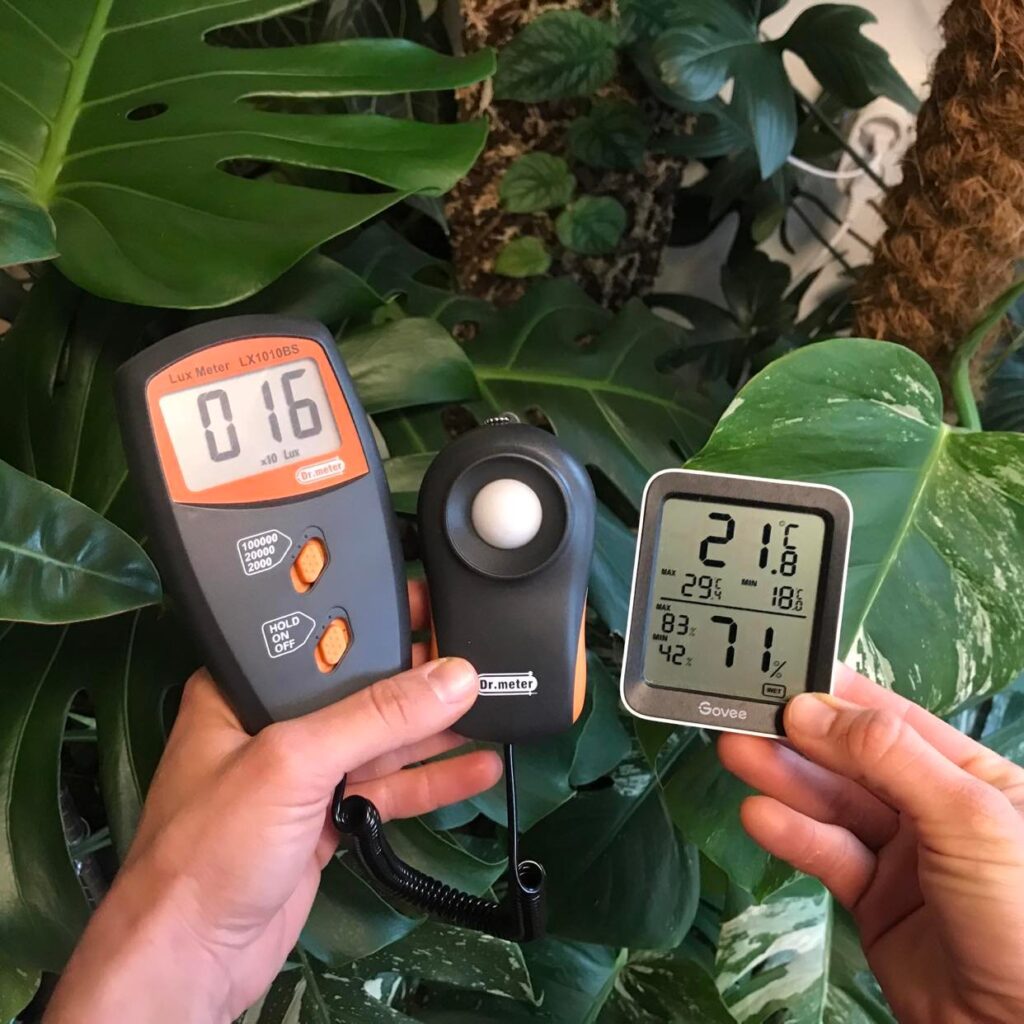
Low light can also be solved with grow lights. It’s quite possible we can’t fit every plant into a bright spot, since the collection tends to grow a little too much over the growing season. The solution is to invest in grow lights. A light meter helps a lot here, because it makes it much easier to judge which spots suit the plants and which don’t. Extra lights also create a lovely atmosphere, brighten the room and lift the mood on gloomy days. They’re useful in summer too, since they can bring light to even the darkest corner — bathrooms and windowless hallways included.
Temperature and humidity
If we manage to gather a big enough collection of happily growing plants, humidity and fresh air become much easier, because the plants take care of a lot of it themselves. All we need to give them is the right temperature and light. At lower temperatures, a plant’s metabolism and growth slow down. The ideal daytime temperature for most tropical plants is 20–24 °C; nights can be a little cooler. The lower limit most tropical plants tolerate is around 15 °C.
We still have to open a window every now and then. More sensitive species are best kept out of draughts, so it’s better to air rooms more often, for shorter periods. Also watch out for heat from radiators and fireplaces — plants shouldn’t sit right next to them. If heating makes the air too dry, a humidifier helps. For living spaces, a humidifier with automatic humidity control makes the most sense.
Grow tents and cabinets
Ideal growing conditions are easiest to keep in small, enclosed spaces. You can create a tropical corner in a grow tent, a display cabinet, a terrarium… Let your imagination run free! In an enclosed space we can pamper plants with ideal conditions, and they’ll grow faster and more beautifully — and bring us a lot of joy. We keep an eye on conditions with a humidity and temperature meter, and use a light meter to find the spots best suited for growth.
Light
Depending on the species and the distance from the light, tropical plants will do well under lights costing up to about €100. They’re used to growing in the understorey and don’t need very strong light. Lights can be on for 12–14 hours a day — the plants need enough night-time rest, too.
Humidity
For small enclosed spaces, a simple humidifier with a timer is enough. Run it every day or every few days, for an hour or less. Skip it on watering days, since watering alone will raise the humidity.
Temperature
Heat mats and lights make it easy to warm the whole tropical corner. Around 23–24 °C is the ideal temperature for most tropical plants. They like cooler nights, so the heat mat can be switched off overnight.
Airflow
High humidity can make plants a target for bacterial and fungal problems. This is easy to avoid with a small fan that keeps the air moving inside. On top of that, open the tent or cabinet every day to let fresh air in.
Once the tropical corner is set up, we get to enjoy the sight of happy plants practically exploding with new growth.
Feeding and watering
How often to water and fertilise depends on the conditions the plant lives in. If your home gives plants conditions in which they grow happily, they’ll also need frequent watering and feeding. If you notice they’re resting, water and feed less often. As always — water when the substrate has dried out enough, to avoid root rot.
Ordering new plants
You can welcome a new beauty into your collection in winter too. The risks are higher, but careful handling and buying from conscientious sellers go a long way towards reducing them.
Want to see what we’re growing right now? Browse our hoyas or sign up for the newsletter — once a month, we write about new arrivals and restocks.