

Most of us have come across the classic hoyas that decorated our grandmothers’ homes as houseplants. Many people know them as wax plants, a name that comes from the waxy look of their flowers. They’re often overlooked by plant lovers, because next to other showy rare tropicals they can seem “boring” or “ordinary” at first glance. But the moment we go hunting for rarer hoyas, we discover that this couldn’t be further from the truth.
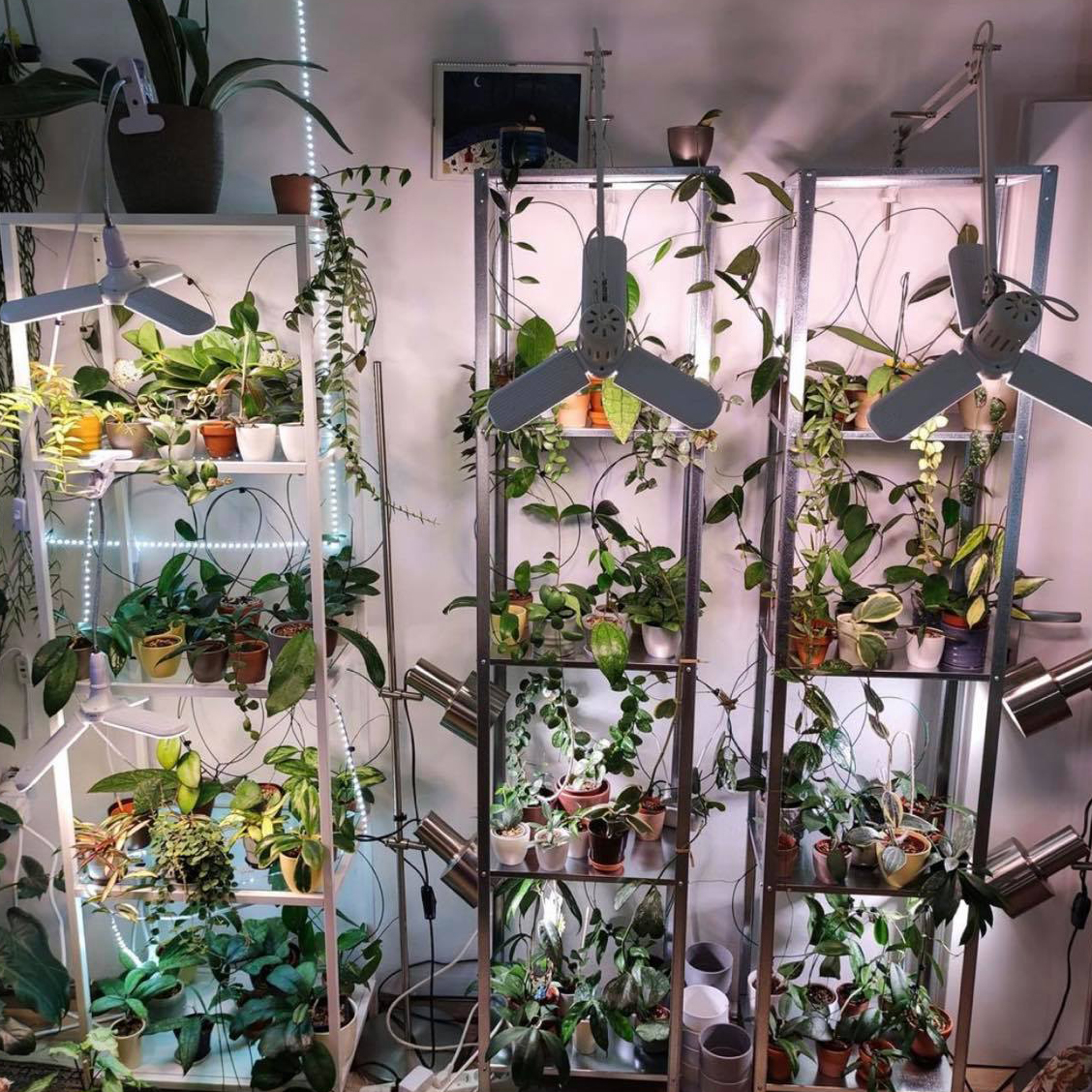
We quickly fall into what’s known as “hoya mania” — a very serious condition in which the shelves at home rapidly fill up with tiny pots of colourful, glossy little plants. There’s no data yet on how wild the plants get in the long run, but photos are already surfacing of dogs and partners who didn’t manage to escape in time.

The diversity of hoyas
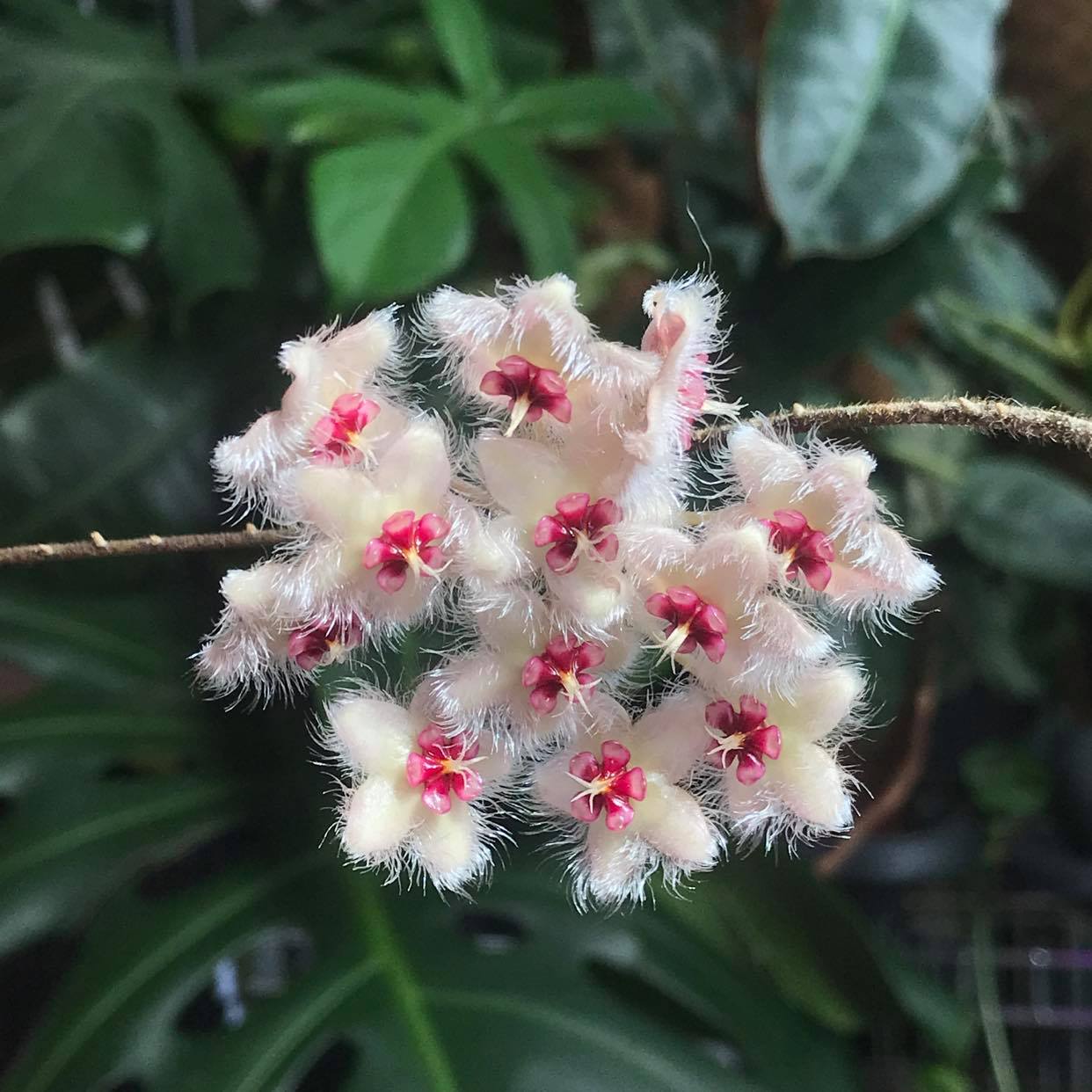
The hoya genus is remarkably diverse, with hundreds of species and a great many cultivars and hybrids. They can win us over with striking variegated leaves, all kinds of vein patterns and shades of colour. Some even blush red when they get enough light. And they often surprise us, showing their true beauty only once they flower.
Caring for hoyas
We should try to give them growing conditions that are as close as possible to their natural habitat. As tropical plants, they like higher humidity, regular watering and plenty of indirect light. They usually adapt quickly and easily to indoor humidity, and some species handle direct sun well. Above all, water them regularly — otherwise they’ll drop their young leaves. Some species are climbers that twine their tendrils around a support; others grow into lovely bushy plants and are happiest trailing from their pots.
When choosing a substrate, keep in mind that hoyas like regular, generous watering but have very delicate roots that rot easily. The substrate needs to drain very well and be airy. In my experience, substrate is the single biggest cause of problems when growing hoyas. Plants from large European nurseries are usually grown in coco peat, which on its own doesn’t drain well. Species that have been grown this way for generations are better adapted to it, so I’m not surprised some people have no trouble. What works best for me is a very airy mix of bark, pumice, coco peat and other additives, which you can also find in our shop.
Propagating hoyas
Several rooting methods work well for hoyas. I’ll share the one I use most.
The best material for cuttings is mature, hardened-off growth. Older parts of the plant root faster and more reliably. Pay attention to the spacing between nodes, too: with short internodes there’s less room for error when cutting, and it’s harder to save the cutting if rot sets in — so on compact growth it’s better to take several nodes.
With sterile scissors, cut the stem about half a centimetre above the lower leaves. Once the cut has dried, stick the cutting into a very airy hoya mix. Water it and place it somewhere warm and humid with enough light, then wait patiently for signs of new growth. Roots can appear within a week, but new leaves usually take at least a month. Some species can keep you waiting for several months — which makes the new growth all the more exciting.
Cuttings need to be gradually acclimatised to indoor conditions. You can start before new leaves are on the way, or once they’ve hardened off. Stressed hoyas drop young, soft leaves very quickly, so the best time to acclimatise is when there’s no new growth underway.
I hope this gives you a good introduction to the magical world of hoyas, and to just how much joy these wonderfully varied tropical plants can bring. If you’d like to add a hoya to your collection, we offer everything from easy, common species for beginners to rare and unusual ones for more advanced collections — as cuttings or rooted plants.
Want to see what we’re growing right now? Browse our hoyas or sign up for the newsletter — once a month, we write about new arrivals and restocks.